

Designing UX Influence in a Decentralized Organization
OVERVIEW
When I joined Amazon Japan Consumer Innovation, I was the first and only UX designer embedded in a highly decentralized product organization. Teams were moving fast, engineering-led, and optimized for delivery, but UX was largely treated as an execution function that entered the process late.
My role quickly expanded beyond designing individual features. The real problem was not a lack of UI quality, but the absence of shared expectations around how UX should participate in product definition, planning, and delivery.
Rather than optimizing individual screens, I focused on shaping the conditions under which UX could operate effectively at scale. This work centered on defining integration points, decision frameworks, and collaboration models that allowed UX to influence product outcomes earlier and more consistently across teams.
CONTEXT & CONSTRAINTS
The organization I joined had several defining characteristics:
Multiple teams operating semi-independently
Product decisions driven primarily by engineering and PM cadence
UX involvement often limited to late-stage validation or polish
No established UX lifecycle, SLA, or shared operating model
From a delivery standpoint, the system worked. Features shipped. However, UX debt accumulated quietly through late design involvement, inconsistent handoffs, and unclear ownership boundaries between disciplines.
Compounding this, UX capacity was scarce. With one designer supporting multiple teams, it was not feasible to deeply embed in every initiative. Any solution had to scale influence without scaling headcount.
PROBLEM FRAMING
The core problem was not “how do I design better screens,” but:
How do I make UX involvement predictable and visible in a system that was not designed for it?
How do I help teams understand when and how UX should be engaged, without becoming a bottleneck?
How do I balance limited UX capacity against growing organizational demand?
This required shifting UX from an ad-hoc service into a defined part of the product lifecycle.
STRATEGIC DECISIONS MADE
Prioritizing Systemic Influence Over Feature Delivery
Early on, I made a deliberate trade-off: I deprioritized deep ownership of individual UI features in favor of defining frameworks that could influence many initiatives simultaneously.
This meant investing time in documentation, alignment, and education, even when short-term feature work might have been more visible. The risk was appearing less “productive” in the traditional sense. The upside was leverage.
Defining a UX Integration Lifecycle
I introduced a UX integration model that mapped design involvement to existing product and engineering phases. Rather than asking teams to adopt a new process, I aligned UX touchpoints with milestones they already recognized.
This clarified:
When UX input was expected
What level of fidelity was appropriate at each stage
Where UX decisions should inform product direction versus execution
The goal was not to enforce rigid gates, but to create shared expectations.
Establishing a UX SLA to Manage Scarcity
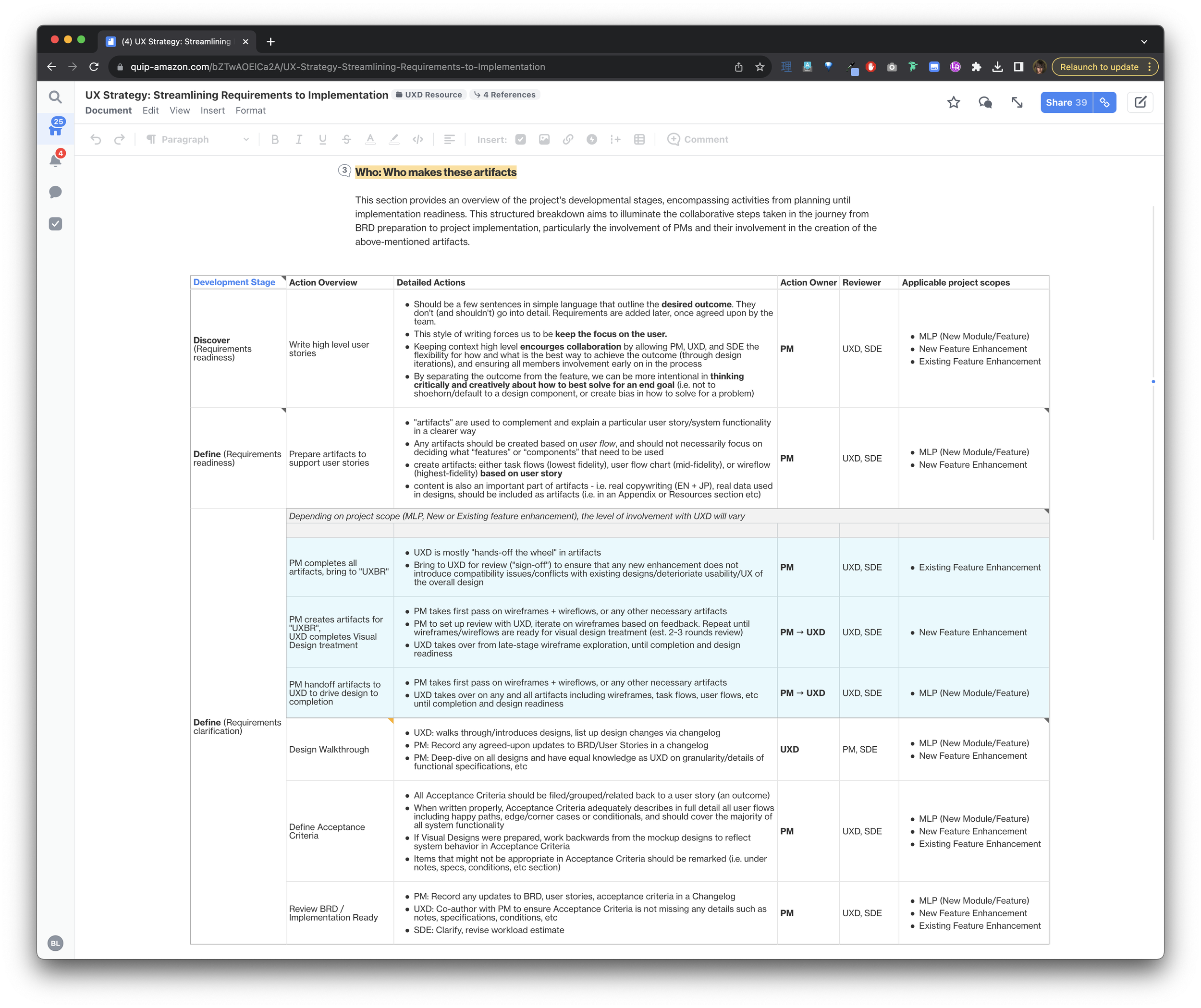
With limited UX capacity, I defined a service-level agreement for UX involvement. This was not about restricting access, but about making trade-offs explicit.
The SLA helped teams understand:
What types of work required UX involvement
What lead time was needed for meaningful design input
When teams could proceed independently using existing standards
This reframed UX from a reactive service to a planned dependency.
Creating a Design-to-Engineering Handoff Standard
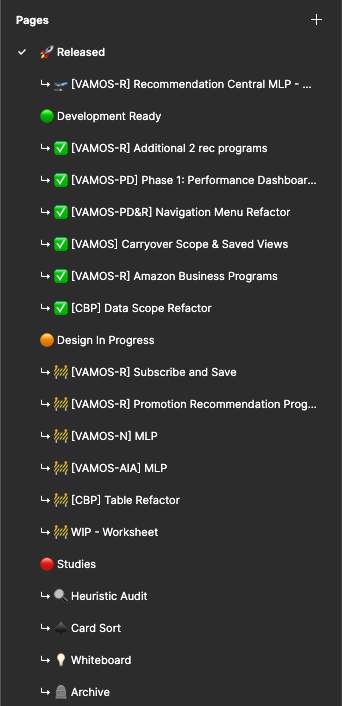
Example page organization within Figma
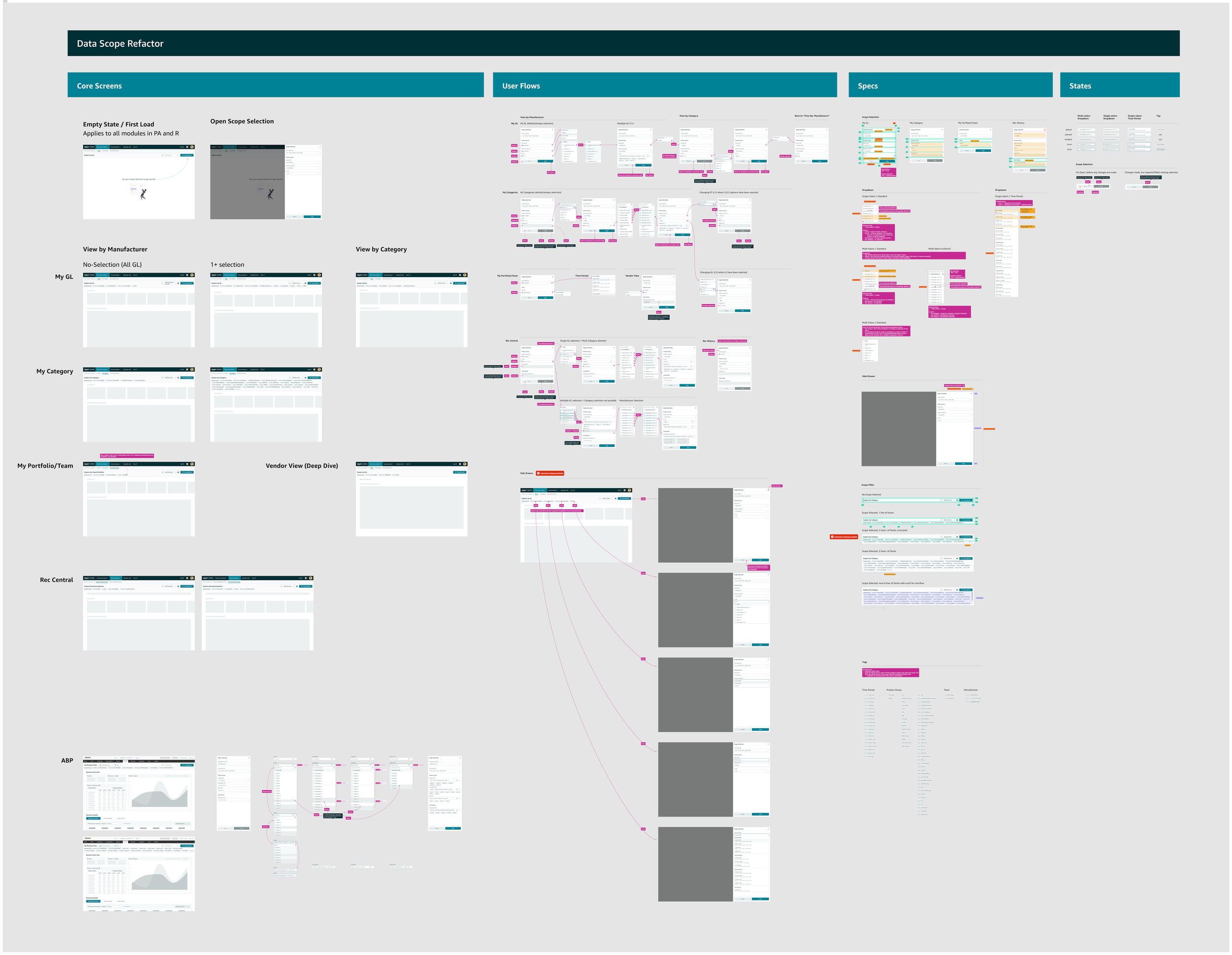
Example Figma file following the above sections
Inconsistent handoffs were a recurring source of friction and rework. I created a standardized design handoff guide that clarified:
What artifacts were required
How design intent should be communicated
What constituted “ready for implementation”
This reduced ambiguity for engineers and improved trust in design deliverables.
Scaling UX Thinking Through Workshops and Frameworks
Recognizing that I could not be everywhere, I invested in raising UX literacy across the organization. I facilitated workshops and shared frameworks that helped PMs and engineers reason about user experience even when UX was not directly embedded.
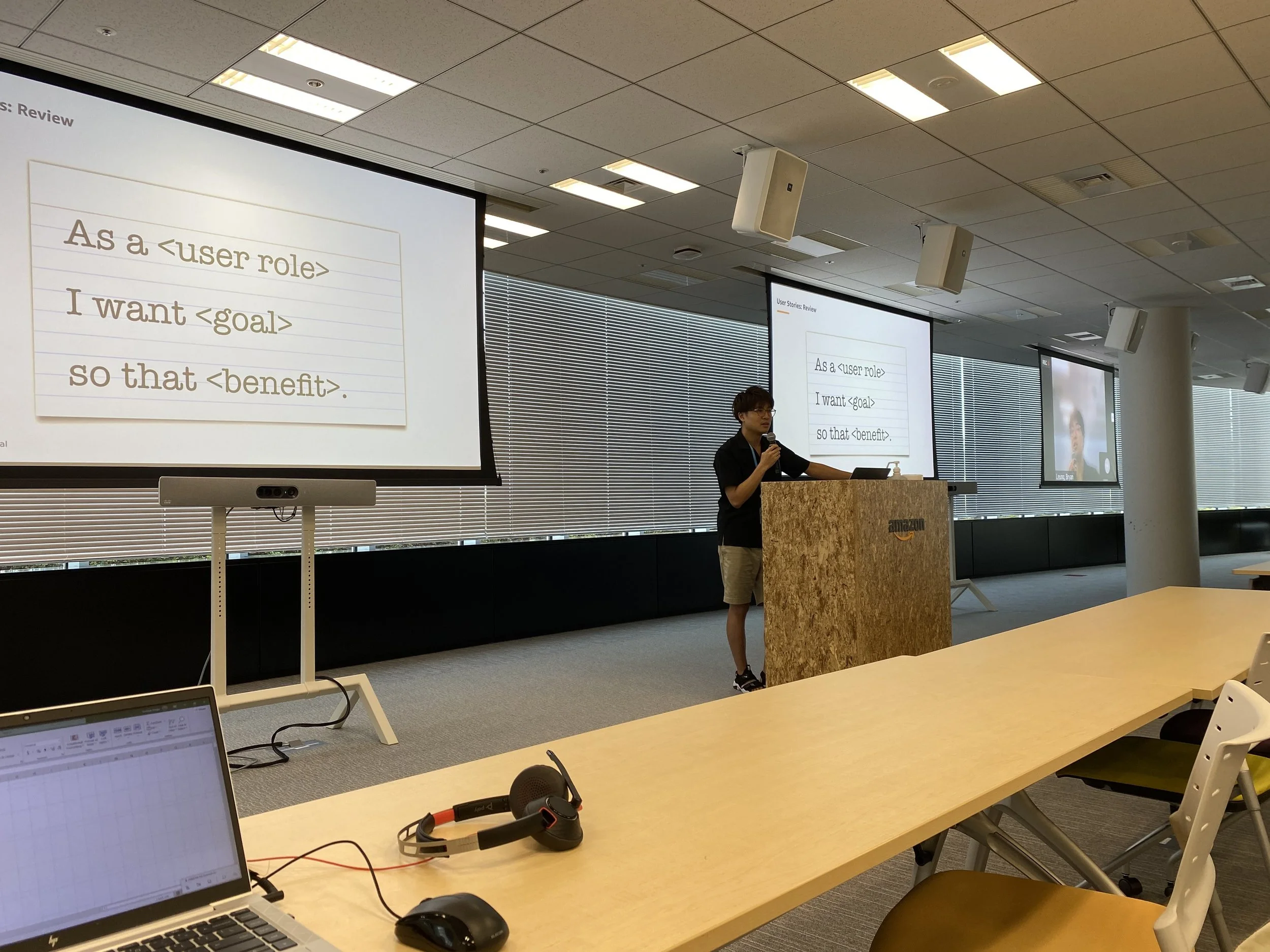
“Customer-focused design for the Non-Designer” workshop series that I hosted
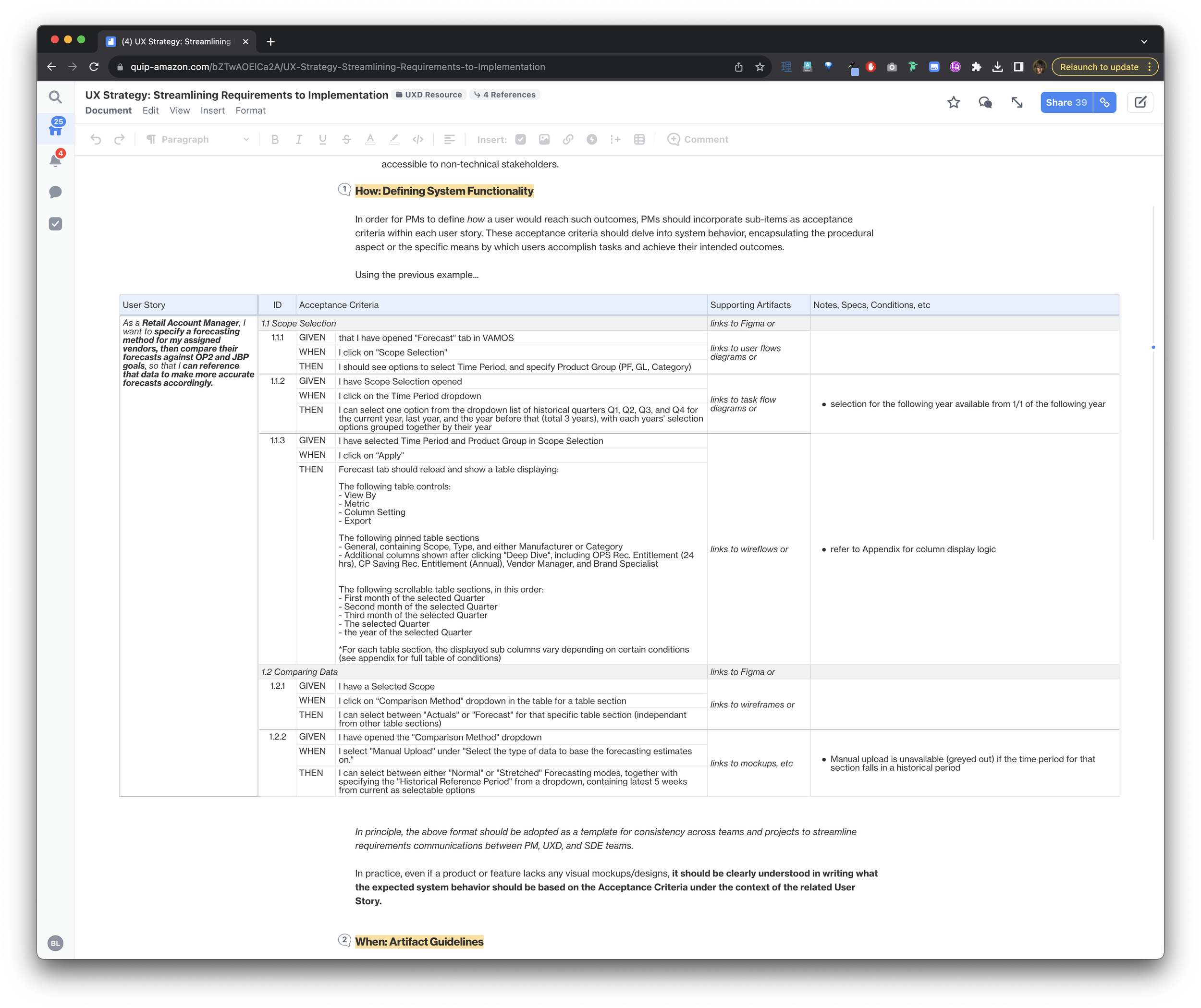
To scale UX influence beyond my direct involvement, I focused on improving how work was defined upstream. As part of my workshops, I introduced a structured approach to user story composition that paired clear intent with GIVEN / WHEN / THEN acceptance criteria. This helped PMs and engineers reason about user experience earlier, before design or implementation began. This structure was quickly adopted across teams and became the default format for defining user stories and acceptance criteria.
Over time, this shifted conversations earlier in the lifecycle and reduced last-minute design escalations.
TRADEOFFS & TENSIONS
These decisions were not without tension.
Investing in frameworks delayed some tactical UI output
Formalizing expectations surfaced friction around ownership
Pushing for earlier involvement required negotiation with existing delivery timelines
However, these trade-offs were intentional. Optimizing for local speed would have preserved the status quo. Optimizing for systemic clarity created longer-term leverage.
IMPACT & EARLY SIGNALS
Because much of this work focused on organizational behavior rather than discrete product metrics, impact was observed qualitatively and structurally rather than through dashboards.
Notable shifts included:
PMs involving UX earlier in planning discussions
Clearer expectations around when design input was needed
Reduced rework caused by late-stage design changes
Improved consistency in how design decisions were communicated and implemented
Broader adoption of UX frameworks beyond the initial teams I supported
While not easily quantifiable, these changes altered how teams operated day to day.
WHY THIS WORK MATTERED
In environments like Amazon, design impact is not always about the artifacts produced. It is about shaping how decisions are made, how disciplines collaborate, and how quality is maintained under scale and pressure.
By focusing on integration models, standards, and influence rather than individual features, I helped establish a foundation for UX to operate more effectively across a complex organization.
REFLECTION
This project marked my transition from feature execution to systemic influence. It reinforced that senior design impact often comes from shaping the conditions under which good design is possible, not just producing artifacts.
Designers at this level are not just solving user problems. They are solving organizational ones. The most durable outcomes come from clarifying roles, expectations, and decision-making structures that outlive any single release.
If I were to do this again, I would invest earlier in lightweight measurement of behavioral change to make impact more visible. Even so, the shift in how teams collaborated made the value of this work clear.